 18+
18+
18+
18+
Free demo — no real money. Loads the provider's official demo build. Demos may be unavailable in some regions.
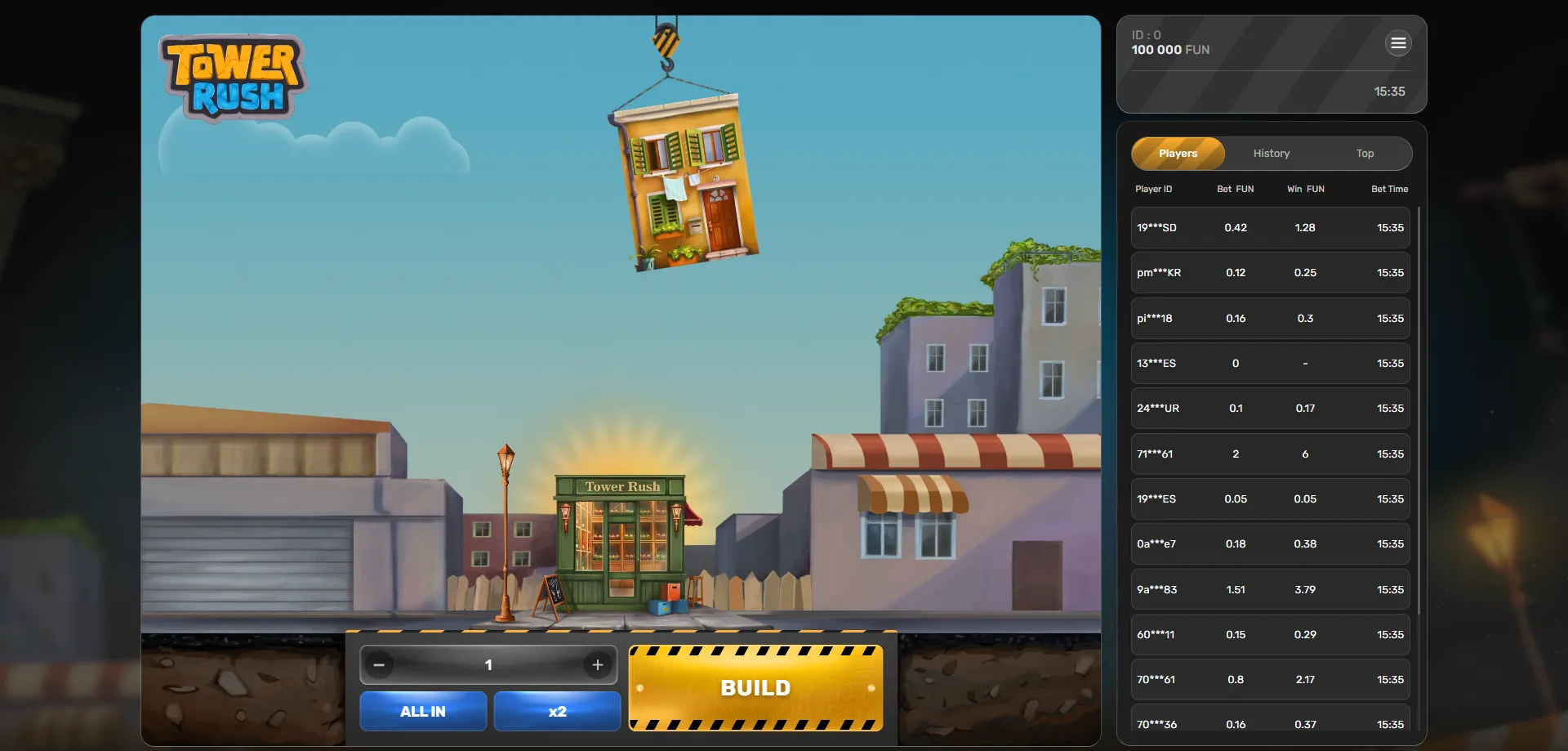
Tower Rush covers a deceptively simple mechanic — a multiplier climbs, you cash out before the tower collapses — but what matters is whether your decision-making holds up across hundreds of rounds, not just one lucky exit. The gap between a player who wins occasionally and one who manages consistent results comes down entirely to structure, not fortune.
Luck determines the outcome of any single round. Strategy determines what happens to your bankroll over a full session. In Tower Rush, rounds end in seconds, which means impulsive decisions compound faster than in any traditional slot. A player relying purely on instinct will chase losses, hold too long chasing big multipliers, and exit profitable sessions early out of anxiety. Strategic thinking replaces those emotional triggers with pre-defined rules.
The key insight is this: no tower rush strategy eliminates variance. What it does is give you a framework that survives variance without catastrophic loss. That distinction is everything in a high-volatility crash game.
Tower Rush is built on a certified random number generator (RNG), meaning the crash point of each round is determined before the round begins and cannot be influenced mid-play. What you control is your stake size, your cash-out threshold, and whether you play with an auto cash-out or manually. These three levers are the entire toolkit. A disciplined player maximises those levers; an undisciplined player ignores them and hopes the algorithm cooperates.
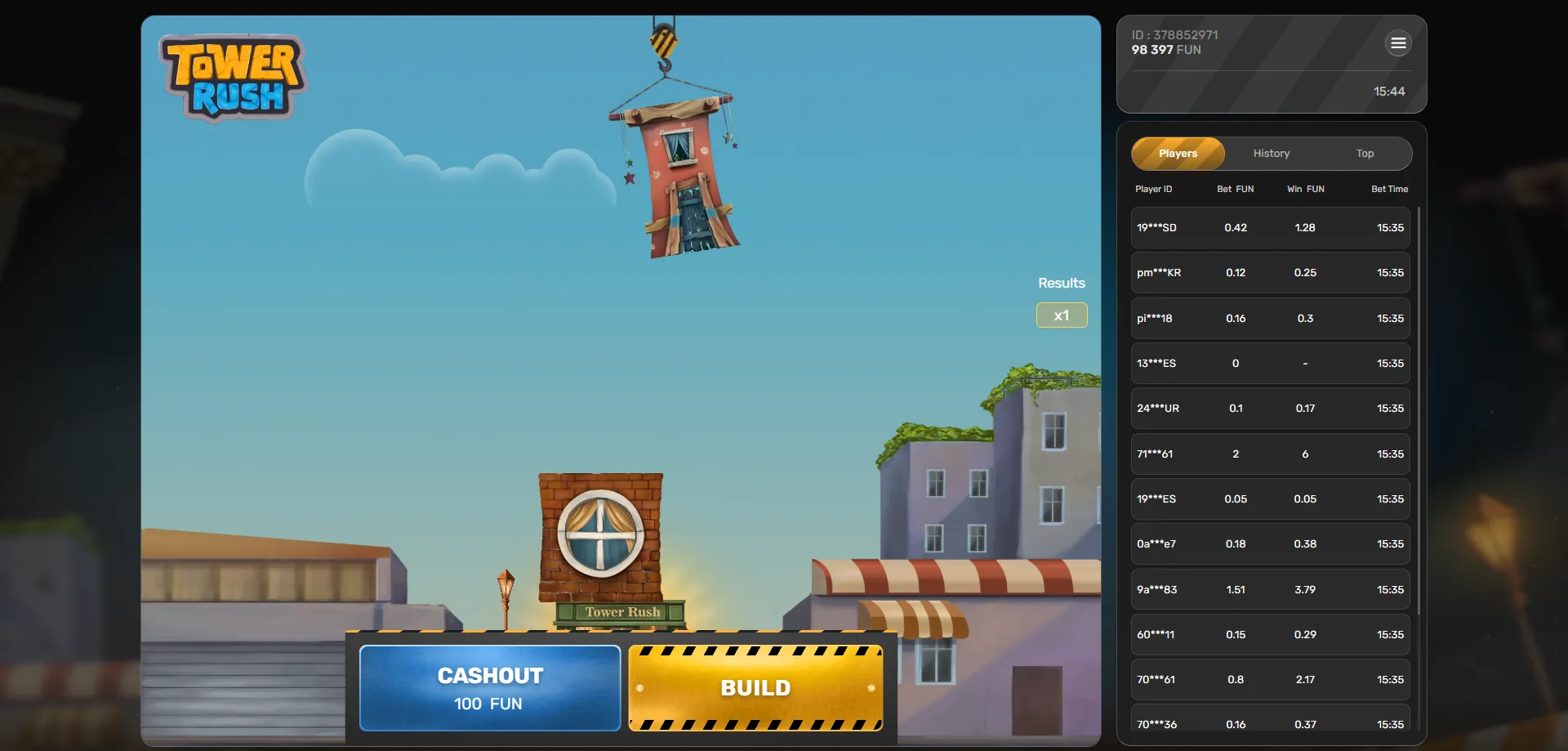
Before any cash-out timing discussion makes sense, you need to understand the game's statistical profile. Tower Rush is developed by Galaxsys and carries an RTP of approximately 97%, which is meaningfully above the industry average for standard slot games. That figure tells you the game returns around ₹97 per ₹100 wagered over millions of rounds — it does not guarantee short-term results, but it sets the baseline for any honest strategy discussion.
Tower Rush is classified as high volatility. In practical terms, this means extended losing streaks are a normal feature of the game, not a sign of something going wrong. High volatility crash games produce infrequent but larger wins when your timing is correct, and rapid consecutive losses when the tower collapses early. Any tower rush strategy must account for this reality by building in enough cushion to survive cold streaks.
The 97% RTP is your long-run edge against the house — it is one of the more competitive figures in the online casino space. But high volatility means the short-term deviation from that theoretical return can be wide. Conservative cash-out targets at 1.5× to 2× bring your actual session results closer to the theoretical RTP. Targeting multipliers above 5× introduces significant variance and requires a much deeper session budget to stay in the game long enough for the statistical edge to materialise.
Unlike traditional slots, Tower Rush has no paytable with symbol combinations. Your payout is always your stake multiplied by the multiplier at the exact moment you successfully cash out. This means the payout structure is entirely transparent: 2× your stake at a 2× cash-out, 5× your stake at a 5× cash-out, and so on. Before you begin a session, decide which multiplier range you are targeting and set your auto cash-out accordingly. Changing that target mid-session based on recent results is one of the most common and costly tower rush game tricks mistakes players make.
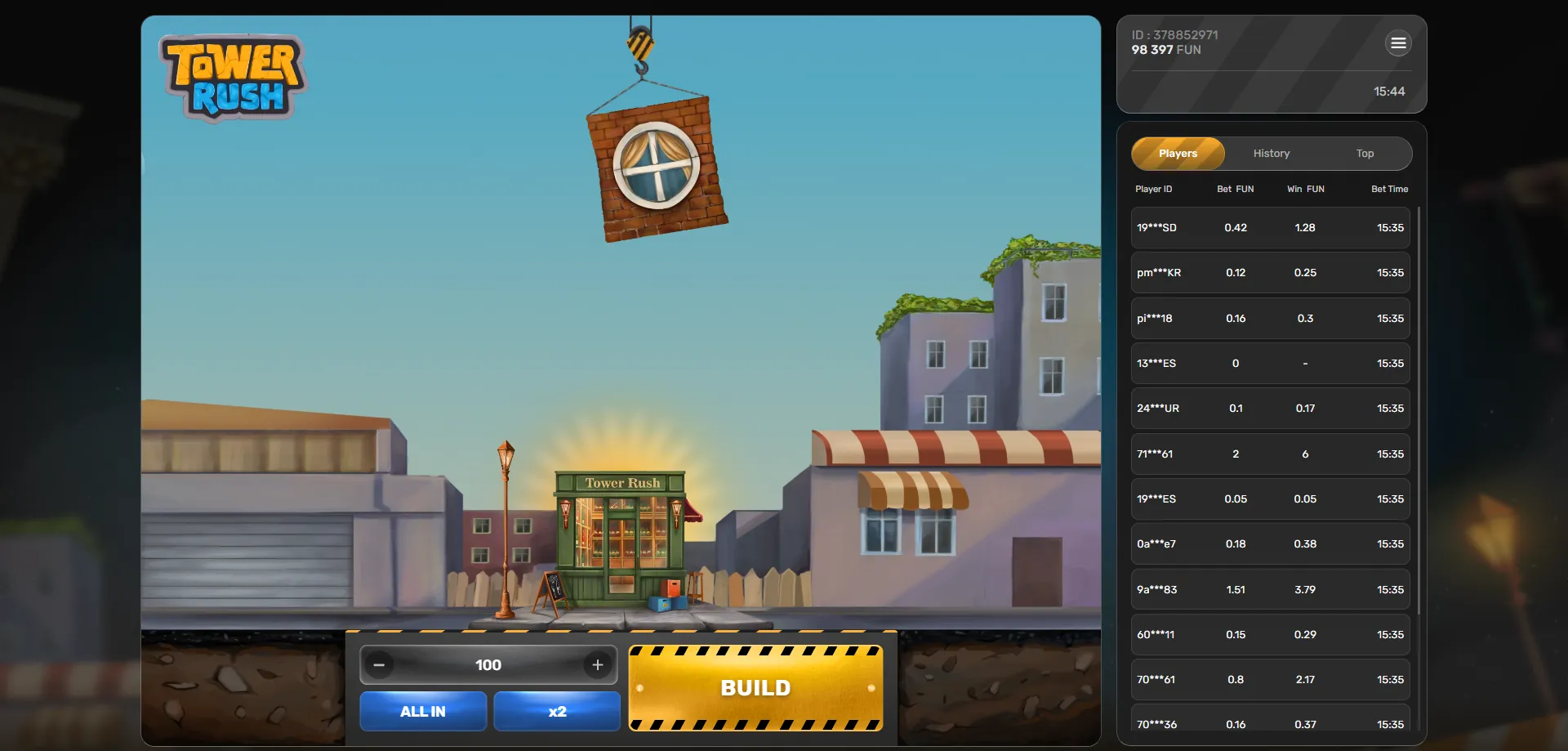
Every professional bettor across every game type will tell you the same thing: bet sizing discipline is the single most important variable you control. This is especially true in Tower Rush, where rounds resolve in seconds and fifty rounds can happen inside a single hour. Without structured bankroll management, a bad run of early crashes wipes your session before you have had any real opportunity to recover.
The most reliable approach for Tower Rush is to limit each individual round stake to between 1% and 3% of your total session budget. If you deposit ₹1,000 for a session, your per-round stake should sit between ₹10 and ₹30. At 1%, a streak of ten consecutive early crashes — which is entirely possible in a high-volatility crash game — costs you only 10% of your session budget. You remain in the game with sufficient capital to recover during a favourable sequence.
Players who ignore this principle and stake 10% or more per round on the assumption that the game is "due" a long run are making a fundamental error. Tower Rush rounds are independent events. There is no statistical debt, no hot slot phenomenon, and no pattern in the crash points that rewards large reactive bets after a cold streak.
Before each session, set two non-negotiable limits: a session loss limit and a session time limit. The loss limit should be the maximum amount you are genuinely comfortable losing in one sitting — typically no more than 20% to 30% of your total playing budget. The time limit prevents the extended fatigue that erodes decision quality in a fast-format game like Tower Rush. When either limit is reached, the session ends. No exceptions, no extensions.
Use the casino's responsible gambling tools to enforce these limits where possible. Setting a deposit limit or session duration cap in your account removes the psychological pressure of making that call in the moment when you are most tempted to override it.
There is no single tower rush strategy that suits every player. The right approach depends on your risk tolerance, session budget, and target multiplier range. The following three frameworks cover the main options, each suited to a different volatility appetite.
Flat betting means placing the same stake on every round regardless of recent outcomes. It is the most mechanically straightforward approach and the one that most accurately mirrors the game's theoretical RTP over time. Combined with a consistent auto cash-out target — typically in the 1.5× to 2× range — flat betting produces frequent small wins that build gradually and losses that deplete the bankroll at a predictable, manageable rate.
Flat betting suits players who prefer session longevity over big single-round payouts. It is the recommended starting point for anyone new to Tower Rush before experimenting with progressive systems.
A progressive approach — increasing your stake after a loss and reducing it after a win — is often associated with the Martingale system. In Tower Rush, applying strict Martingale logic is high-risk because rapid early crashes can double your required stake multiple times within minutes, quickly breaching table limits or exhausting your budget.
A modified progressive approach, sometimes called a soft Martingale, involves increasing stakes by a fixed percentage — say 25% to 50% — rather than doubling them, and capping increases at a maximum of three to four consecutive rounds before resetting to the base stake. This preserves some of the recovery logic of progressive betting while limiting catastrophic exposure. Always define your ceiling before you start.
The reverse pyramid — also called anti-Martingale — involves increasing stakes after wins and returning to base after a loss. In Tower Rush, this means riding a hot sequence with progressively larger stakes while capping your downside during cold patches. The logic is sound for high-volatility crash games: you are maximising exposure when outcomes are running in your favour and protecting capital when they are not.
The critical discipline with the reverse pyramid is defining in advance how many consecutive winning rounds you will let the stake climb before locking in profit. Three to four rounds up the pyramid is a practical ceiling. Without a defined top, players tend to hold the escalating stake too long and give back gains on a single early crash.
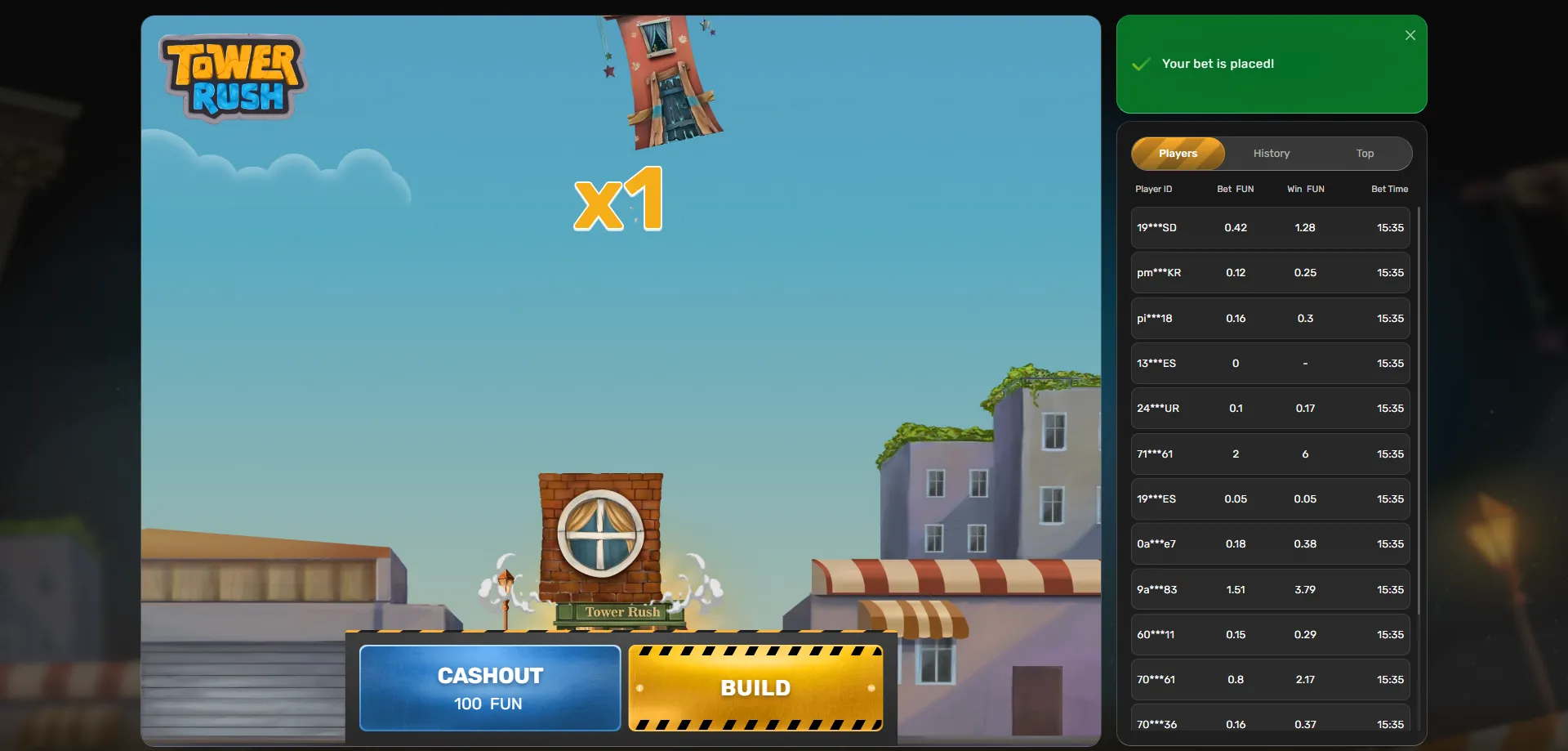
Tower Rush supports real-money play at casinos offering welcome bonuses, reload promotions, and cashback deals. The strategic value of a bonus depends on its wagering requirements and whether crash game stakes contribute to meeting them. Before accepting any promotion, verify that Tower Rush rounds count toward wagering — not all casinos include crash-format games in their contribution percentages.
When a bonus is eligible, treat the bonus balance as a separate bankroll. Apply the same 1%–3% per-round staking rule to the bonus funds. Attempting to clear wagering requirements with high-variance high-multiplier targets increases the risk of forfeiting the bonus before it converts to withdrawable cash. Conservative cash-out targets of 1.5× to 2× are better suited to clearing wagering efficiently, as the higher hit frequency generates more round completions per ₹100 wagered.
Free play in demo mode is a strategically valuable resource that many players overlook. The Tower Rush demo replicates the full real-money experience with virtual credits. Use demo sessions to test and calibrate your auto cash-out thresholds before committing real money. Treat each demo session with the same discipline as a funded one — setting stake limits, logging outcomes, and reviewing your cash-out accuracy.
The mechanical side of Tower Rush strategy is straightforward to learn. The psychological side is where most players fail. A game that resolves in seconds creates a rapid feedback loop that activates cognitive biases more aggressively than slower-paced formats.
The gambler's fallacy is the belief that past outcomes influence future independent events. In Tower Rush, this manifests as the conviction that a series of early crashes means a long multiplier is "due." It is not. Each round's crash point is determined independently by the RNG before the round begins. Five consecutive crashes at 1.2× carry no predictive information about the sixth round.
The hot slot illusion is the inverse: believing that a game running long multipliers will continue to do so. A run of three or four high multipliers is statistically unremarkable in a sample of thousands of rounds. Increasing stake size mid-session because the game "feels hot" is one of the most common and damaging tower rush game tricks misconceptions players carry into a session.
Losing streaks in high-volatility crash games are not anomalies — they are an expected feature. The practical response is not to increase stakes to recover losses faster, but to reduce them or pause the session entirely. When you notice yourself rationalising a stake increase after consecutive losses, that is precisely the moment your pre-session rules exist to override your in-session instincts.
Two practical techniques help maintain discipline. First, set your auto cash-out before the session and do not adjust it based on recent results. Second, take a five-minute break after any run of five consecutive losses. The physical interruption breaks the loss-chasing cycle more reliably than willpower alone.
Serious crash game players keep a session log. It does not need to be elaborate — a spreadsheet with date, starting balance, ending balance, target multiplier, average stake, and a brief note on any rule violations is sufficient. Over time, the log reveals patterns that are invisible in the moment: whether your conservative sessions consistently outperform your aggressive ones, whether your results at particular times of day differ, and whether specific stake-to-multiplier combinations perform closer to the theoretical RTP.
A log also creates accountability. It is harder to rationalise rule violations when you have to write them down. Players who track sessions are significantly less likely to chase losses, because the log makes the cumulative cost of chasing immediately visible in cold numbers rather than abstract memory.
If you want to go deeper on the game's statistical profile before building your log, explore the Tower Rush RTP and Volatility breakdown, which covers the 97% return figure and high-volatility mechanics in detail. For players just getting started with the format, the How to Play Tower Rush – Game Guide covers the core mechanics, auto cash-out setup, and round structure from scratch.
A pre-session checklist is the single most effective tool for translating strategy into consistent practice. Review every item before your first bet of any session.
The tower rush strategy that works in 2026 is not a secret algorithm or a pattern decoded from historical crash data. It is the disciplined application of bankroll management, pre-defined exit rules, and psychological self-awareness across every session you play. Every item on this checklist addresses a specific failure mode that costs players money in practice. Work through it every time, without exception.
Sign up today at storkmedtech.com and climb the levels with an exclusive $500 match bonus plus 50 free spins on Tower Rush.
🎯 Play Now🔒 18+ · T&C Apply · Play Responsibly